DO & CO Sets Comprehensive Animal Welfare Standards Across Global Supply Chain
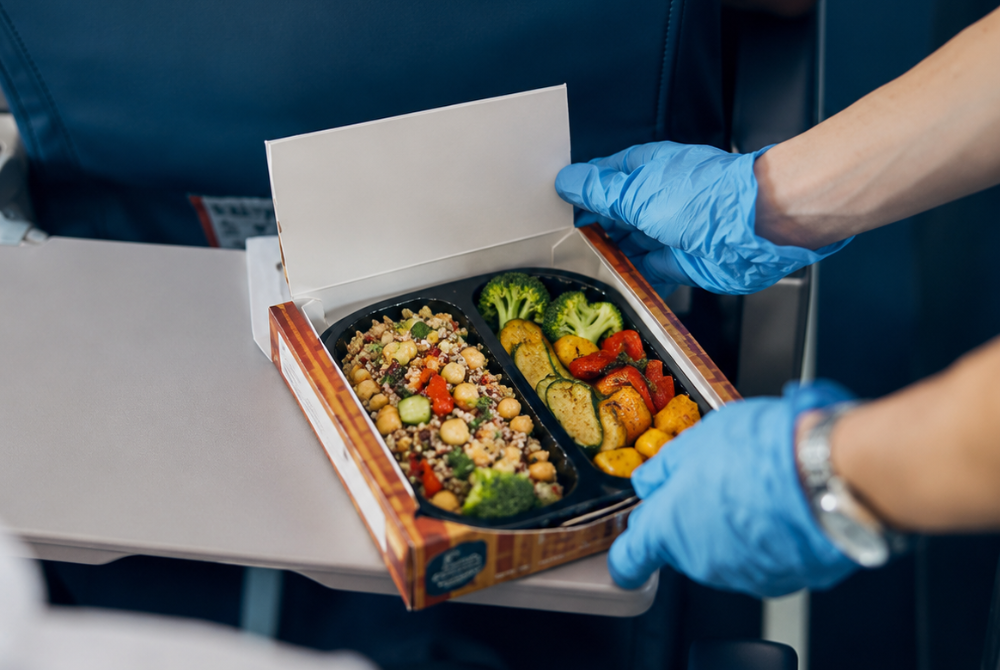
A passenger settling into a business class seat on British Airways, Delta, or Etihad may not think about where their in-flight meal comes from. Behind it is DO & CO, one of the world's leading travel and event catering companies, and as of this year, one with a significantly stronger position on animal welfare.
A POLICY THAT COVERS THE WHOLE SUPPLY CHAIN
DO & CO serves over 180 million meals per year across 12 countries in Europe, North America, the Middle East, and Asia. Beyond airline catering, the company provides food service for major sports arenas and tournaments, restaurants, hotels, and gourmet shops.
The company has published a comprehensive new animal welfare policy setting higher standards for pigs, chickens, and seafood across its global supply chain, with full implementation targeted by 2030.
For pigs, the policy prohibits gestation crates, sow stalls, and farrowing crates, bans tail docking, requires anesthesia for any castration procedures, and mandates adequate litter and environmental enrichments that allow pigs to root and nest naturally.
For chickens, suppliers are required to meet the standards of the European Chicken Commitment or Better Chicken Commitment, covering improved stocking densities, environmental enrichments such as perches and pecking objects, sufficient lighting, and humane slaughter practices.
For seafood, farmed suppliers must meet RSPCA Assured, Global Animal Partnership, or Naturland standards for stocking density, enrichment, and handling, with daily monitoring of water conditions and a requirement for humane stunning. The policy also prohibits mutilations such as eyestalk ablation. For wild-catch suppliers, DO & CO prohibits catch systems that result in significant bycatch or animal welfare issues.
The policy also directs chefs across DO & CO's global locations to increase their use of plant-based proteins, including lentils, chickpeas, black beans, pea protein, tempeh, tofu, and plant-based dairy products, in place of animal-derived ingredients wherever possible.
SETTING A BENCHMARK FOR THE CATERING SECTOR
For a company feeding hundreds of millions of people a year, the policy signals that animal welfare is no longer a niche concern in food service. It is becoming part of how the world's largest catering operations do business.