SaladStop! Group Sets 60% Plant-Based Protein Target Across Global Operations
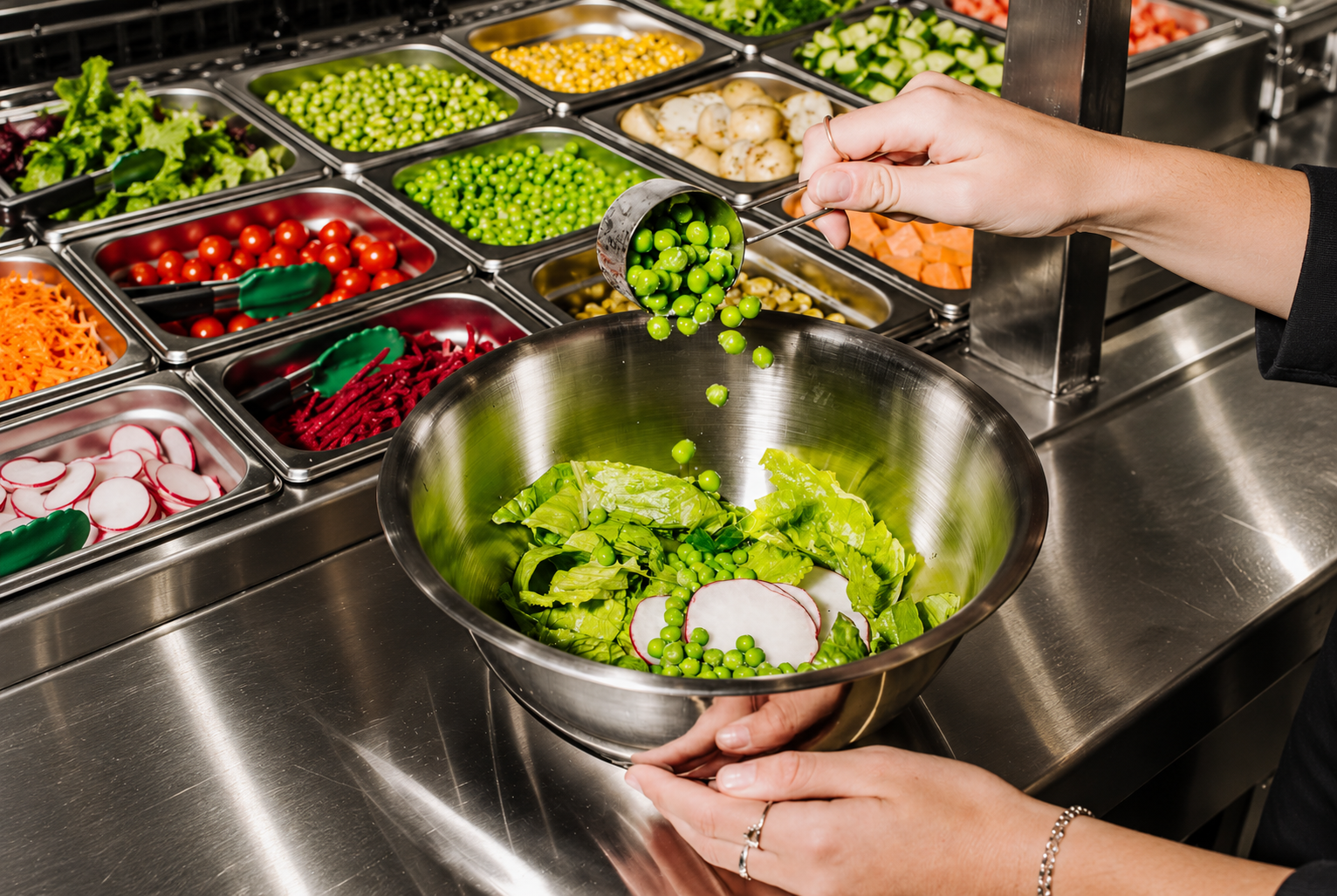
At a SaladStop! counter in Singapore, a customer builds a bowl from a lineup that already leans heavily plant-forward—legumes, seitan, nuts, seeds, whole grains, leafy greens, mushrooms. What they may not know is that this is now a formalized commitment, not just a menu style.
A TARGET ROOTED IN THE BRAND'S DNA
SaladStop! Group has announced a target to source at least 60% of its protein from plant-based ingredients across all its shops globally. Founded in 2009 to bring a more conscious approach to fast food, the group now operates over 80 outlets across Singapore, the Philippines, Indonesia, South Korea, Thailand, Hong Kong, and beyond, serving over five million people a year.
Plant-based proteins are already widely integrated across the group's menus and brand portfolio—SaladStop!, Heybo, Wooshi, Smoosha, and FreshKitchen. The new target formalizes what the group has long practiced, translating a broad sustainability philosophy into a specific, measurable commitment.
The protein target also connects directly to the group's net-zero journey. In 2020, SaladStop! became the first restaurant group in Asia to carbon-label its entire menu. It has since committed to achieving net zero across its operations by 2030. Reaching 60% plant-sourced protein is a concrete step toward reducing the carbon intensity of the food it serves.
In 2023, SaladStop! became B Corp certified, affirming its commitment to high standards of social and environmental performance.
WHAT THE SHIFT MEANS
Plant-based proteins contain no cholesterol, are high in fiber, and are nutrient-rich. Research from the Food and Agriculture Organization of the United Nations has found that plant-based proteins generate substantially lower greenhouse gas emissions than animal proteins, require far less land and water, and produce significantly less food waste.
For a group that has built its identity around the idea that great food and responsible sourcing are the same thing, the 60% target is less a new direction than a line drawn under an existing one.