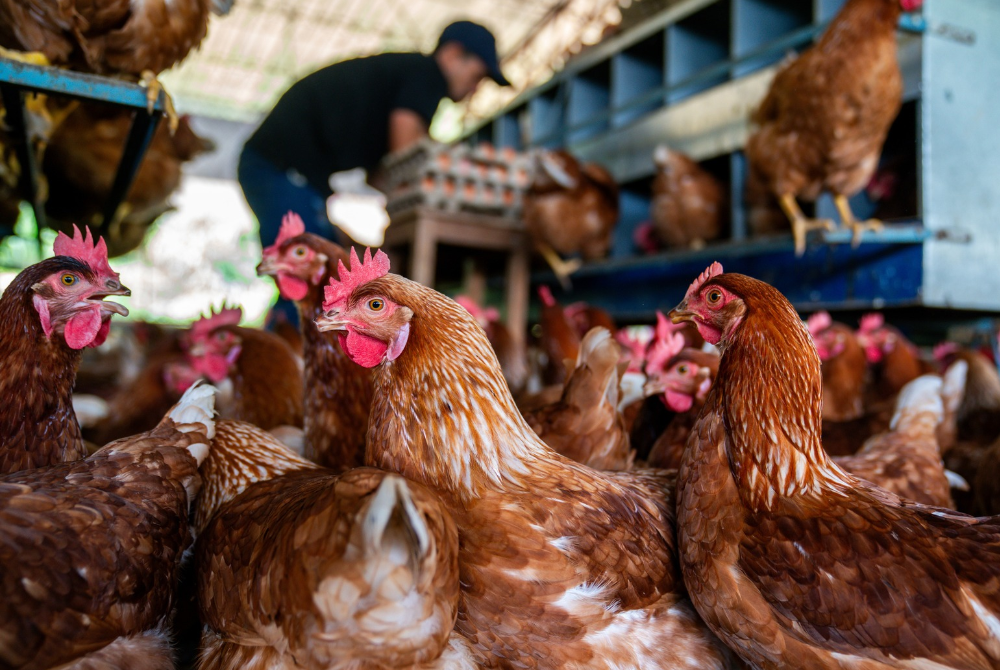
In an aviary barn, laying hens don't spend their lives in a cage. They move between tiers, perch, scratch at the litter, and lay in nest boxes. Running a farm this way at commercial scale requires different housing, ventilation, and conditions. A new book written for Indonesian producers lays these foundations.
The timing matters. Large food companies are making stronger cage-free egg commitments every year, and producers who want to supply them need to know how the system works in practice. Budi Daya Ayam Petelur Bebas Sangkar Skala Komersial di Indonesia (Commercial-Scale Cage-Free Laying Hen Farming in Indonesia) was written by Muhammad Sandi Dwiyanto and Huang Mu-tzu. Pertanian Press, a government publisher, released it in 2025 in collaboration with Lever Foundation. It adapts an earlier Mandarin-language edition, reworked for farming conditions in Indonesia.
FROM MARKET CASE TO BARN FLOOR
The book starts with the reasons to switch. It covers global cage-free trends, corporate sourcing commitments, and the market opportunities they create. It then moves to the farm itself: hen welfare and natural behavior, and how aviary housing is designed to support them.
The book also covers daily operations, including air quality and ventilation. With hens moving freely through an aviary, managing air becomes a routine part of running the barn, and the guide shows producers how to handle it.
Case studies from farms in China show cage-free systems in commercial operation. Indonesian producer PT Widodo Makmur Unggas supplied data for the book.
INDUSTRY LEADERS POINT TO THE SAME PRESSURE
The book opens with forewords from an adviser to Indonesia's agriculture minister and from the heads of three industry bodies: GOPAN, Pinsar Indonesia and GPPU. Two of those leaders also sit in the House of Representatives. Their message is consistent. Demand for cage-free eggs from large buyers is growing, and Indonesian producers need practical guidance to meet it.
For producers preparing to meet that demand, the guide puts the market case, the housing design, and the day-to-day management in one place.